Challenge
A plant in Manoharpur, Jaipur makes polypropylene multifilament yarn. Spinning yarn is a continuous process, so the machines draw power steadily through the day rather than in short bursts. That made electricity one of the largest running costs in the building.
The cost was also climbing. Grid tariffs kept rising, and each rise added to what it cost to produce a kilo of yarn. Yarn is sold into a competitive market, so a rising input cost is difficult to pass on to buyers. It comes out of the margin instead.
Alongside the money, the company wanted to bring down its carbon footprint and run the plant more efficiently overall.
Most of the power was being used in daylight hours, which lines up well with when solar produces. So the case for solar was easy to make. Building it was the harder part.
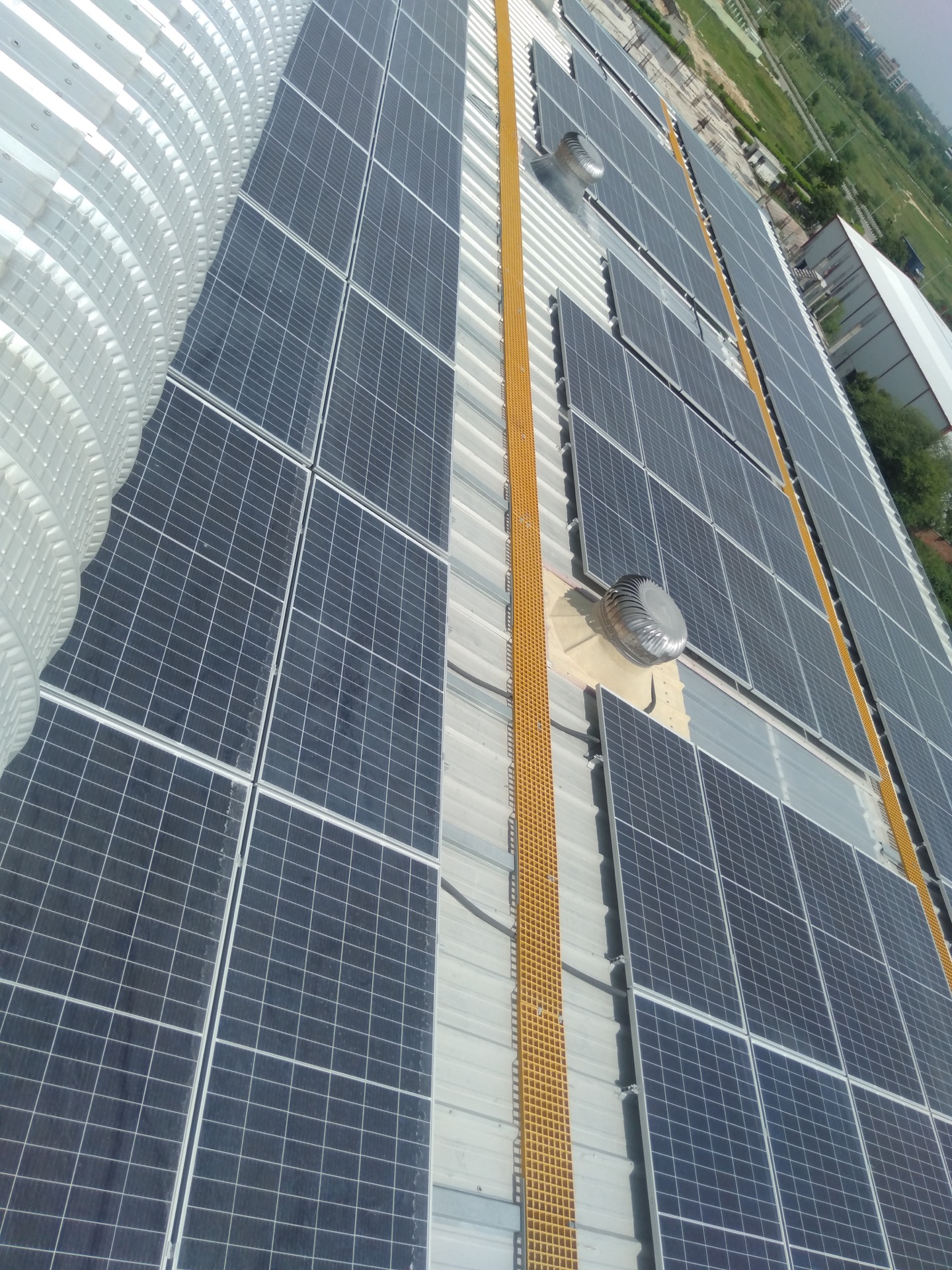
The site did not have one roof. It had three kinds. Some of the buildings were dome type tin sheds, which are curved. Some were flat tin sheds. And some were RCC, meaning solid concrete. Each of those surfaces holds weight differently and needs a different way of fixing panels down, but the finished plant still had to behave as one system.
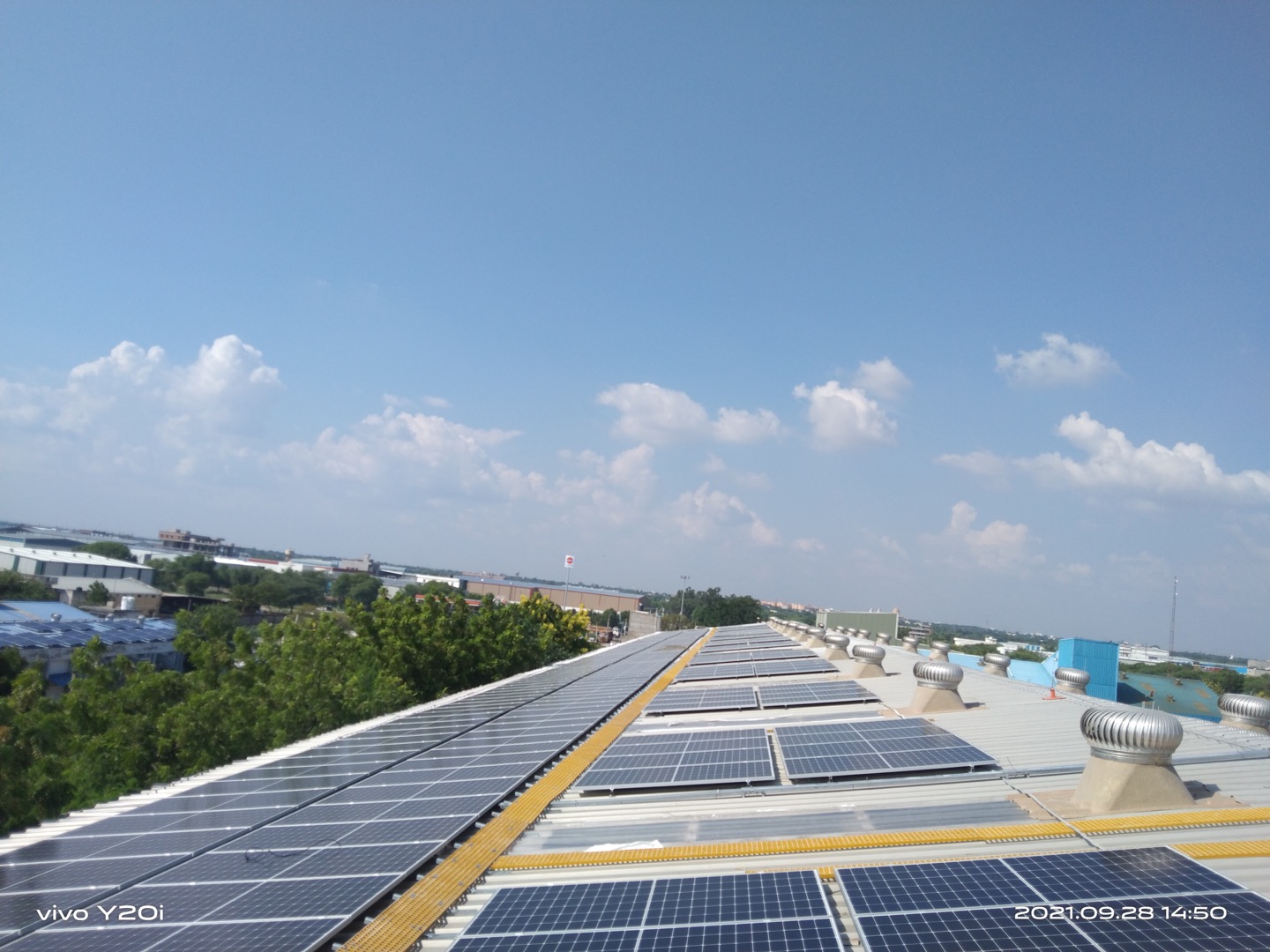
The tin sheds brought their own limits. They were dotted with turbo vents and skylights that could not be blocked, and the roof structures could not carry heavy loads, so whatever went on top had to stay light. The company also needed safe walking access across the roofs afterwards, because panels only keep earning if someone can reach them to clean and check them.
So the target was to fit as much capacity as possible across three different roof types, keep the weight low, work around every vent and skylight, and leave the roofs safe to walk on.
Solution
SolarMaxx began with a detailed structural and electrical feasibility study of the whole site. On a building with three roof types, that step decides everything that follows, because each surface has its own load limit and its own fixing method.
The team then did the detailed engineering and built a mounting solution that works safely on dome sheds, which are the hardest of the three. A mini rail mounting structure was used across the site. It spreads the load out instead of concentrating it, which keeps the total weight the roof carries low. Walkways were designed in from the start so the roof stays safe to move around on.
The electrical design was handled as one job rather than three. Inverter sizing, string configuration, and cable routing were worked out together so that panels sitting on different roofs at different heights still feed into an efficient, safe, and reliable system. The plant uses Jinko 545Wp panels with Sungrow inverters, connected under net metering.
An online remote monitoring system tracks performance in real time. It flags faults as they happen and allows maintenance to be planned in advance instead of waiting for something to fail. On a plant split across several roofs, this matters more than usual, because it tells the team exactly where a problem is before anyone climbs up.
SolarMaxx handled the full regulatory process too: the net metering application, the NOC and demand process, meter and CT testing, the net metering agreement, CEIG approvals, Form 51, and the final metering and protection work.
From first site assessment to commissioning took about three to four months.
Outcome
The 711 kW plant generates about 2,581 units of power a day and saves close to Rs. 75.4 lakh a year. It cuts about 1,980 tonnes of CO2.
Because every usable roof on the site was brought into the design instead of only the easy ones, the plant is larger than a simpler layout would have allowed, and it earns back faster as a result. The power it makes during the day goes straight into spinning yarn rather than being bought from the grid, which puts a floor under one of the plant's biggest and least predictable costs.