Ghana, Africa
1,010 kW
- Commissioned
- 2024
- Modules
- Longi 585Wp
- Inverters
- Sungrow
- Mounting
- Hot-dip galvanized mounting structure
- Metering
- DG-PV sync with zero export device
- Roof
- Ground-mounted
- Annual Savings
- Rs. 77 Lakh
- CO2 Offset
- 1,851 tonnes/year
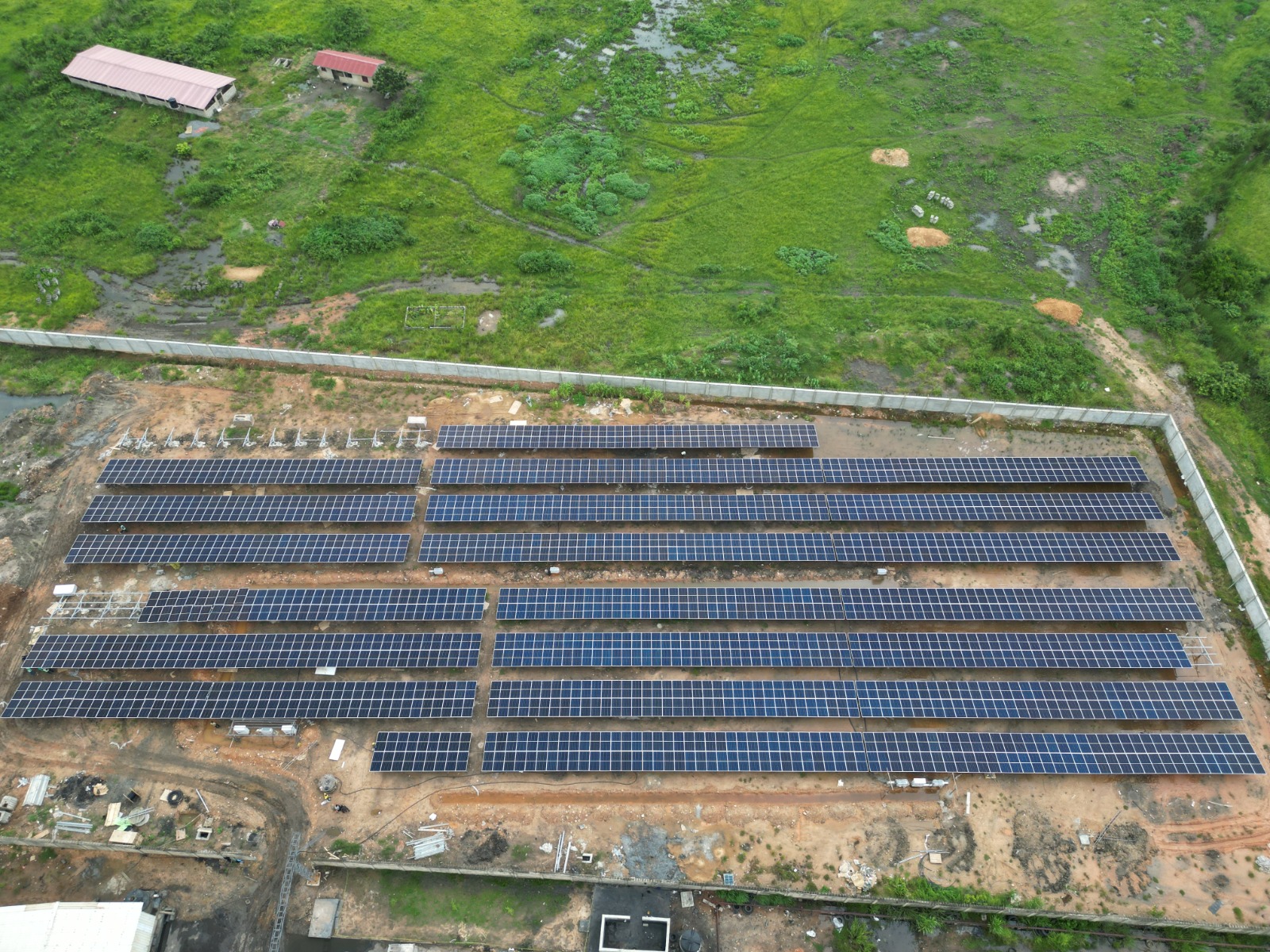
Ground-mounted solar for a metal recycling plant, synchronized with diesel generators on an unreliable local grid.
GHANA, AFRICA
Recyclers Ghana Limited runs a lead and non-ferrous metal recycling operation in Ghana. Recycling at this scale is continuous, power-hungry work, and the site sits on a grid that could not be relied on to hold steady through a working day. For a plant like this, the question was never just what electricity costs. It was whether the supply would behave.
The power quality itself was the first problem. The local grid brought voltage fluctuations and frequency variations, and the poor power quality meant inverters were exposed to surges and transients. Those are the conditions that quietly shorten equipment life on a solar plant, so anything installed here had to be protected rather than simply connected.
The site added its own load. Metal recycling throws off dust and metal particulate that settles on everything, including modules, and the local climate brought high temperatures, heavy rainfall, and rainy seasons that could not be predicted with any confidence. A plant built here had to keep performing through all of it.
Then there was the harder constraint, which had nothing to do with the equipment. This was an overseas project, executed on the ground by a local Ghana team, and it had to hold EPC quality standards using a local workforce. That meant supervising and training Ghanaian labour to the same standard SolarMaxx applies at home, from a different country. Sourcing added pressure too, since exporting some specialized solar equipment during a shortage stretched project lead times.
So the brief went well past the technical design: build a plant that survives a weak grid and a harsh site, deliver it through a team being trained as the work proceeded, and keep it supervisable from thousands of kilometres away.
SolarMaxx designed for availability first. On a site where the grid is unreliable and the nearest senior engineering support is in another country, the plant's value depends on how rarely it stops and how quickly anyone can tell that something has gone wrong.
The system was built around intelligent DG-PV synchronization, so solar and the site's diesel generators run together as one stable supply rather than competing. When grid conditions move, the plant stays up instead of dropping out, which is what a continuous recycling operation actually needs.
A real-time zero export control was added through a zero export device. It keeps generated power going into the plant's own consumption instead of back out, maximizing self-consumption while keeping the installation compliant on the utility side.
The hardware was specified for the environment it had to live in. This is a ground-mounted plant using Longi 585Wp modules with Sungrow inverters on a hot-dip galvanized GI module mounting structure, chosen to stand up to particulate, heat, and heavy rain without degrading. Real-time monitoring and protection systems were built in, giving maximum plant availability, reduced downtime, and seamless remote supervision from India.
On execution, the local Ghanaian workforce was supervised and trained through the build so that EPC quality standards held on a site being delivered by a team new to this kind of work. SolarMaxx handled the DG-PV synchronization work and the zero export mechanism.
From site assessment to commissioning took about three to four months.
The 1,010 kW plant generates about 2,626 units of power a day, saves close to Rs. 77 lakh a year, and offsets about 1,851 tonnes of CO2.
This was SolarMaxx's first overseas project, and the conditions were less forgiving than anything a domestic rooftop presents: an unstable grid, a corrosive and dusty environment, unpredictable weather, and a workforce being trained as the plant went up. The system runs stably alongside diesel generation and is supervised remotely from India, which proves the engineering and quality process travels intact rather than depending on who happens to be standing on site.
1,010 kW


SEZ, JAIPUR
SEZ, JAIPUR
Get a free site assessment and financial model. No obligation. No generic quotes.
Book a Free Assessment