Nasirabad, Ajmer
620 kW
- Commissioned
- 2021
- Modules
- Trina 540Wp
- Inverters
- Sungrow
- Mounting
- Mini rail mounting structure
- Metering
- Net metering
- Roof
- Rooftop tin shed
- Annual Savings
- Rs. 60.3 Lakh
- CO2 Offset
- 3,564 tonnes/year
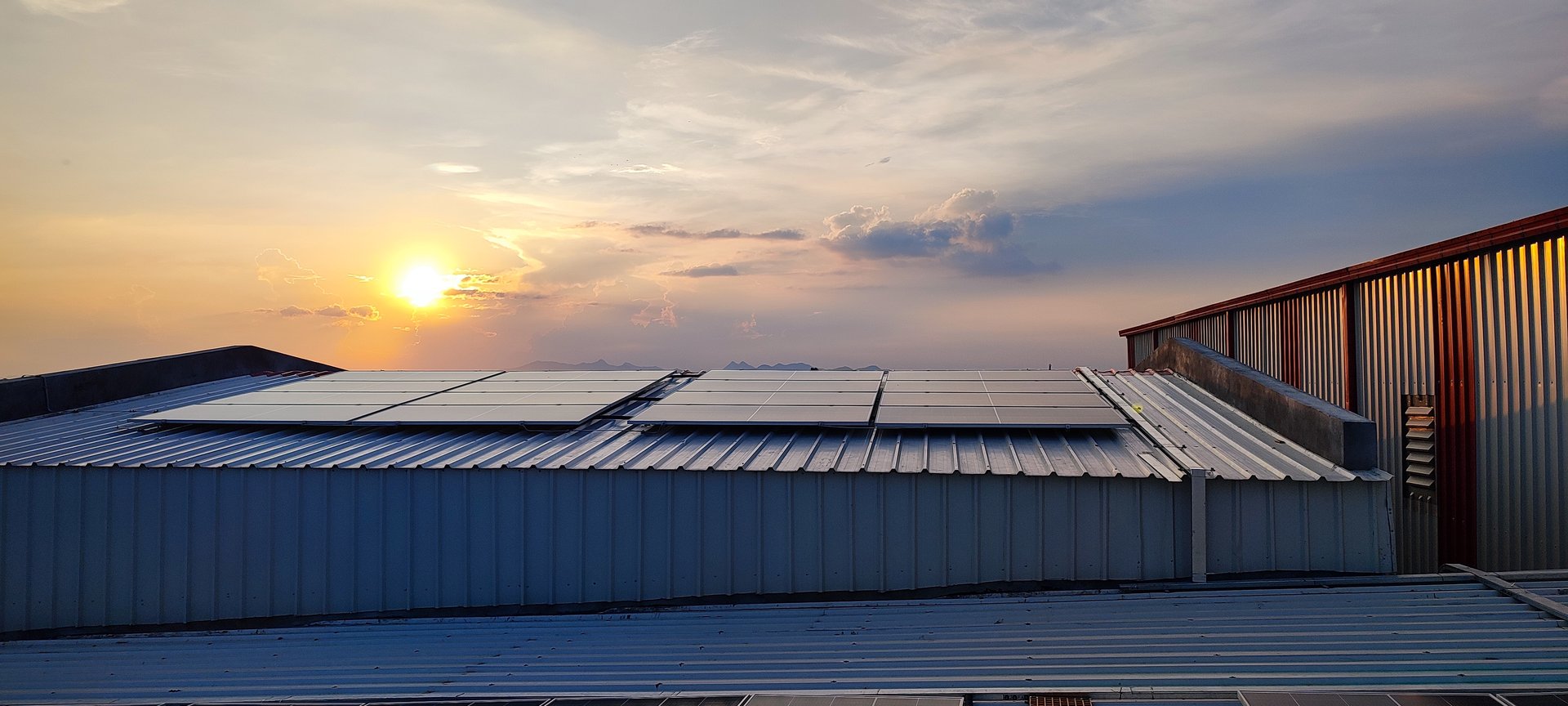
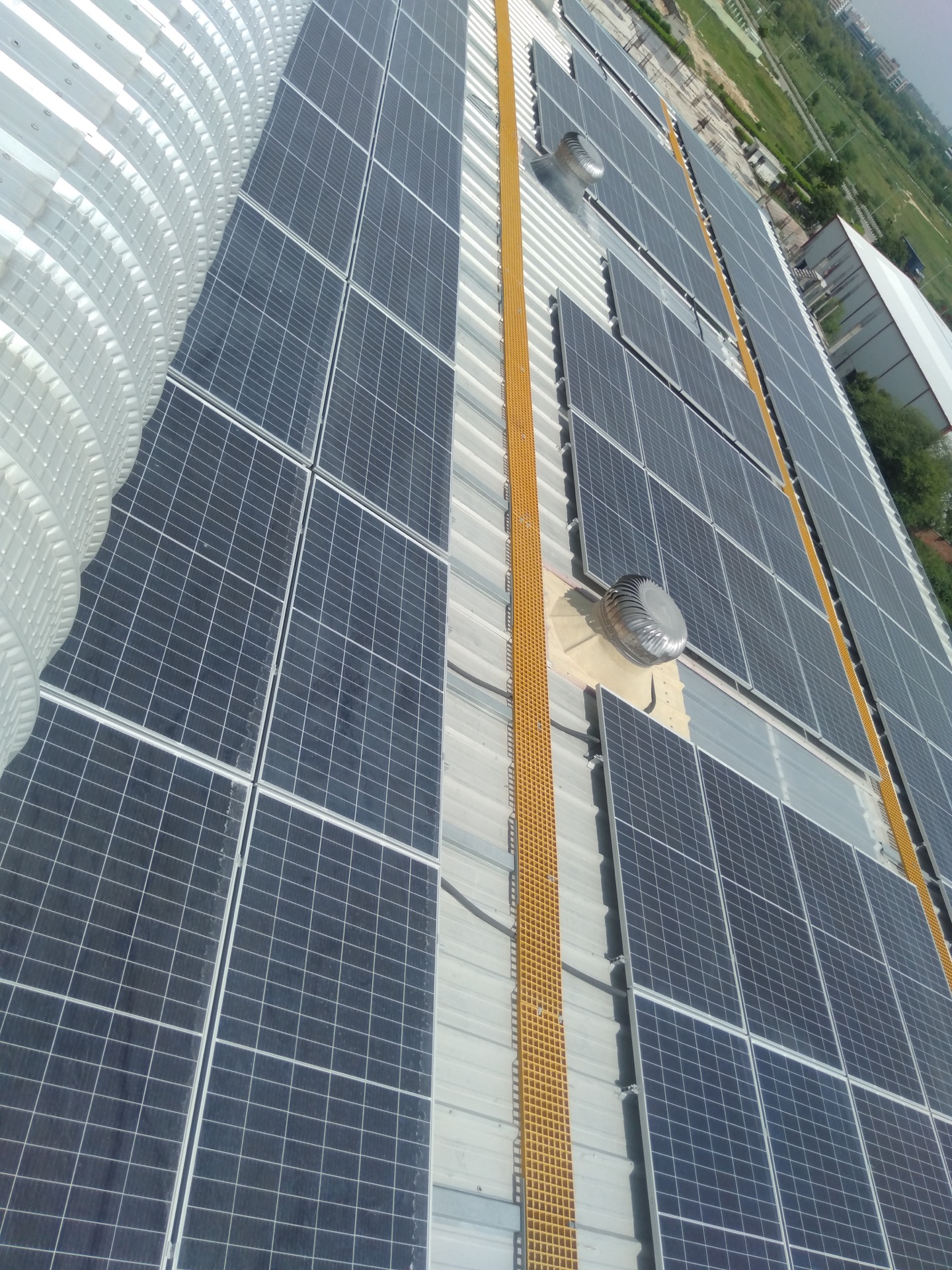
Rooftop solar fitted around HVAC, pipelines, and live factory operations.
NASIRABAD, AJMER
GRTM Industries Pvt. Ltd. makes soaps, detergents, and household cleaning products at its factory in Nasirabad, Ajmer. That kind of manufacturing runs on steady daytime power, and the plant's electricity use was high enough that the monthly bill had become one of the hardest costs to manage.
The bill was also climbing. Grid tariffs kept rising, and every rise pushed up the cost of making each unit. In a competitive consumer-goods market, that comes out of the operating margin rather than the sticker price. Alongside the money, the company had sustainability commitments: cut carbon emissions while bringing down long-term energy costs.
Most of the load fell during daylight hours, which is when a rooftop plant produces the most. So the case for solar was clear. Fitting it onto this roof was not.
Usable, shadow-free rooftop area was limited. HVAC units and process pipelines already occupied large stretches of the tin shed, which meant every panel position had to be chosen around equipment that could not be moved. Installation had to happen without interrupting ongoing manufacturing and dispatch, so the build had to work around a live factory rather than ask the factory to pause. On top of that, the project had to meet DISCOM regulations, net-metering requirements, electrical safety standards, and factory safety protocols.
That left a narrow path: put as much capacity as possible on a crowded tin shed, keep production and dispatch moving underneath, and clear every regulatory step without cutting corners on safety.
SolarMaxx started with a full site survey and designed the plant around the roof that was actually available, not an ideal clear one. The goal was to get the highest generation possible within the shadow-free area left between the HVAC units and pipelines.
The DC and AC systems were engineered for safe integration with the factory's existing LT/HT electrical infrastructure, so the new plant could plug into power systems already running the floor. Cable routing and inverter placement were planned together to keep the system safe to operate, easy to maintain, and reliable over the long run. The plant uses Trina 540Wp panels on a mini rail mounting structure with Sungrow inverters, connected under net metering.
Remote monitoring and performance analytics were added so generation can be tracked in real time and issues show up early rather than after output has already dropped.
SolarMaxx handled the documentation and regulatory process end to end: the net metering application, the NOC and demand process, meter and CT testing, the net metering agreement, CEIG approvals, Form-51 completion, and the final metering and protection work.
From site assessment to commissioning took about three to four months.
The 620 kW plant generates about 2,064 units of power a day and saves roughly Rs. 60.3 lakh every year. It offsets about 3,564 tonnes of CO2.
Because the layout was pushed to use the limited clear roof between existing equipment, daytime generation now feeds straight into manufacturing instead of being bought from the grid. That puts a floor under a cost that had been climbing with every tariff revision, without asking a busy cleaning-products factory to stop production to get there.
620 kW


SEZ, JAIPUR
SITAPURA, JAIPUR
SEZ, JAIPUR
Get a free site assessment and financial model. No obligation. No generic quotes.
Book a Free Assessment