Ranchi, Jharkhand
900 kW
- Commissioned
- 2022
- Modules
- Trina 545Wp
- Inverters
- Sungrow
- Mounting
- Mini rail mounting structure
- Metering
- Net metering with DG synchronization
- Roof
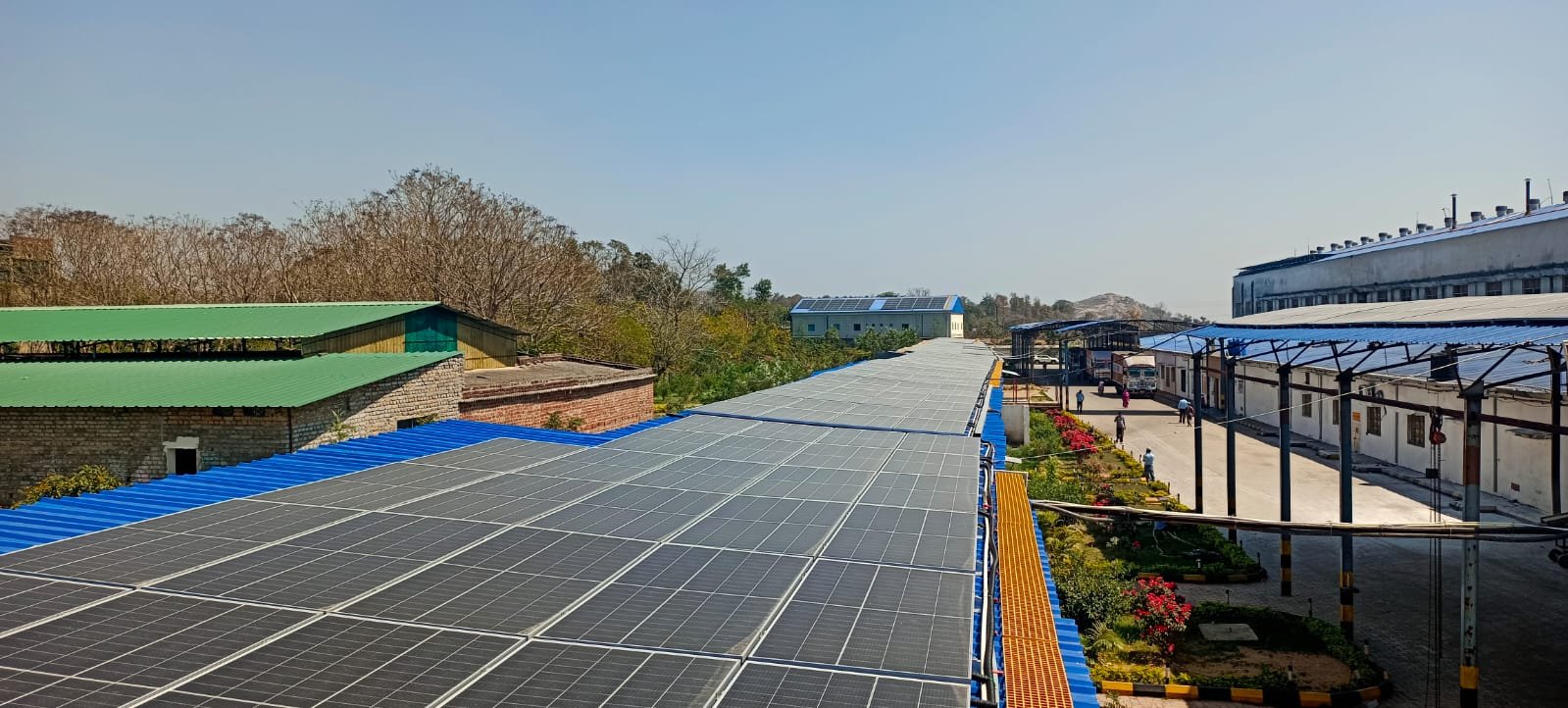
- Rooftop tin shed
- Annual Savings
- Rs. 75 Lakh
- CO2 Offset
- 2,899 tonnes/year
Rooftop solar with DG synchronization for a Parle contract manufacturing plant that still needs diesel backup.
RANCHI, JHARKHAND
Saa Vishnu Bakers Private Limited runs contract manufacturing production for Parle at its facility in Ranchi, Jharkhand. Production at this scale is steady, all-day work, and the electricity consumption that came with it was high enough to sit among the plant's real production costs rather than at the edges of the budget.
The direction of that cost was the bigger problem. Grid tariffs kept rising, and each rise pushed up what it cost to produce, which worked directly against overall profitability. In a business where output prices are set by a competitive market, an input cost that only moves one way comes out of the margin.
Diesel was the second cost layer. The plant leaned on diesel generators, and notably during daytime hours rather than only for night-time outages. That meant the site was paying twice for the same shift: high monthly electricity bills, plus fuel for generators running through the working day.
Two constraints shaped how anything could be built. The plant had to comply with Jharkhand DISCOM policies for net metering and with electrical safety standards, and the whole installation had to be executed during factory running hours. A production line supplying Parle does not pause for a construction schedule.
So the target was clear enough to state and hard to deliver: cut the energy cost per unit of production, reduce both grid dependence and daytime diesel, satisfy the DISCOM on every point, and do all of it without interrupting a plant that was running the entire time.
SolarMaxx designed the plant around maximum rooftop utilization. On a site where the savings case rests on displacing expensive daytime power, every square metre of usable tin shed roof that goes unused is money left on the table, so the layout was pushed to take as much of it as the structure allowed.
The system uses Trina 545Wp modules with Sungrow inverters on a mini rail mounting structure, which spreads load across the tin shed rather than concentrating it and keeps the weight the roof carries low.
The defining choice was on the electrical side. Rather than treating the diesel generators as something solar would eventually replace, the plant was built with net metering and DG synchronization, so solar and the DG sets operate together as one coordinated supply. That directly attacks the daytime diesel burn, because solar carries the load the generators were covering while the generators remain available underneath it.
Designing for that combination is also what maximises the plant's daytime energy gain. Synchronizing with the DG sets means the plant captures the highest possible energy gain from the same installed capacity, lowering operating costs on both the grid bill and the fuel bill at once.
Because installation ran during factory hours, the work had to fit around live production, and the full regulatory process was handled end to end: the net metering application, the NOC and demand process, meter and CT testing, the net metering agreement, CEIG approvals, Form-51 completion, and the final metering and protection work.
From site assessment to commissioning took about three to four months.
The 900 kW plant generates about 2,062 units of power a day and saves close to Rs. 75 lakh every year. It offsets about 2,899 tonnes of CO2.
The saving lands in two places rather than one. Grid electricity bought during daylight hours drops, and so does the diesel the plant was burning through the day, which is the more expensive of the two per unit. Because the generators stay synchronized rather than displaced, the plant keeps the backup a contract production line supplying Parle needs while paying for far less of the power it actually consumes, and the cost of producing each batch is now partly insulated from the next tariff revision.
900 kW


SEZ, JAIPUR
SITAPURA, JAIPUR
SEZ, JAIPUR
Get a free site assessment and financial model. No obligation. No generic quotes.
Book a Free Assessment