Challenge
Manu Yantralaya Pvt. Ltd. makes automotive and bearing components, and this unit sits inside an SEZ in Jaipur. Power demand at the site was high, and the obvious way to meet more of it with solar had already run out: there was simply very little space left to build on.
Limited space availability was the defining constraint. Inside an SEZ there is no option to expand outward, so any capacity had to come from surfaces the factory already owned and was already using for something else.
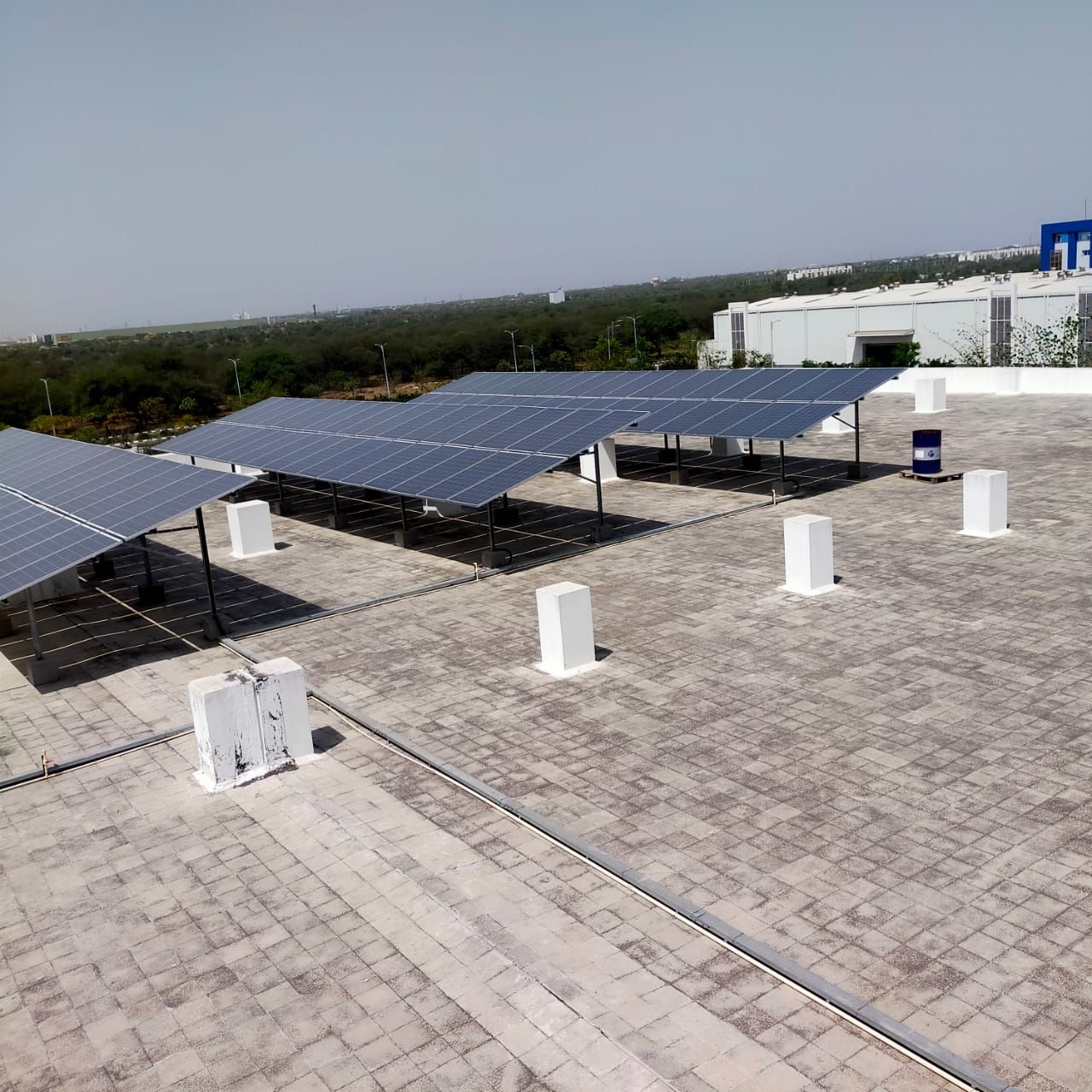
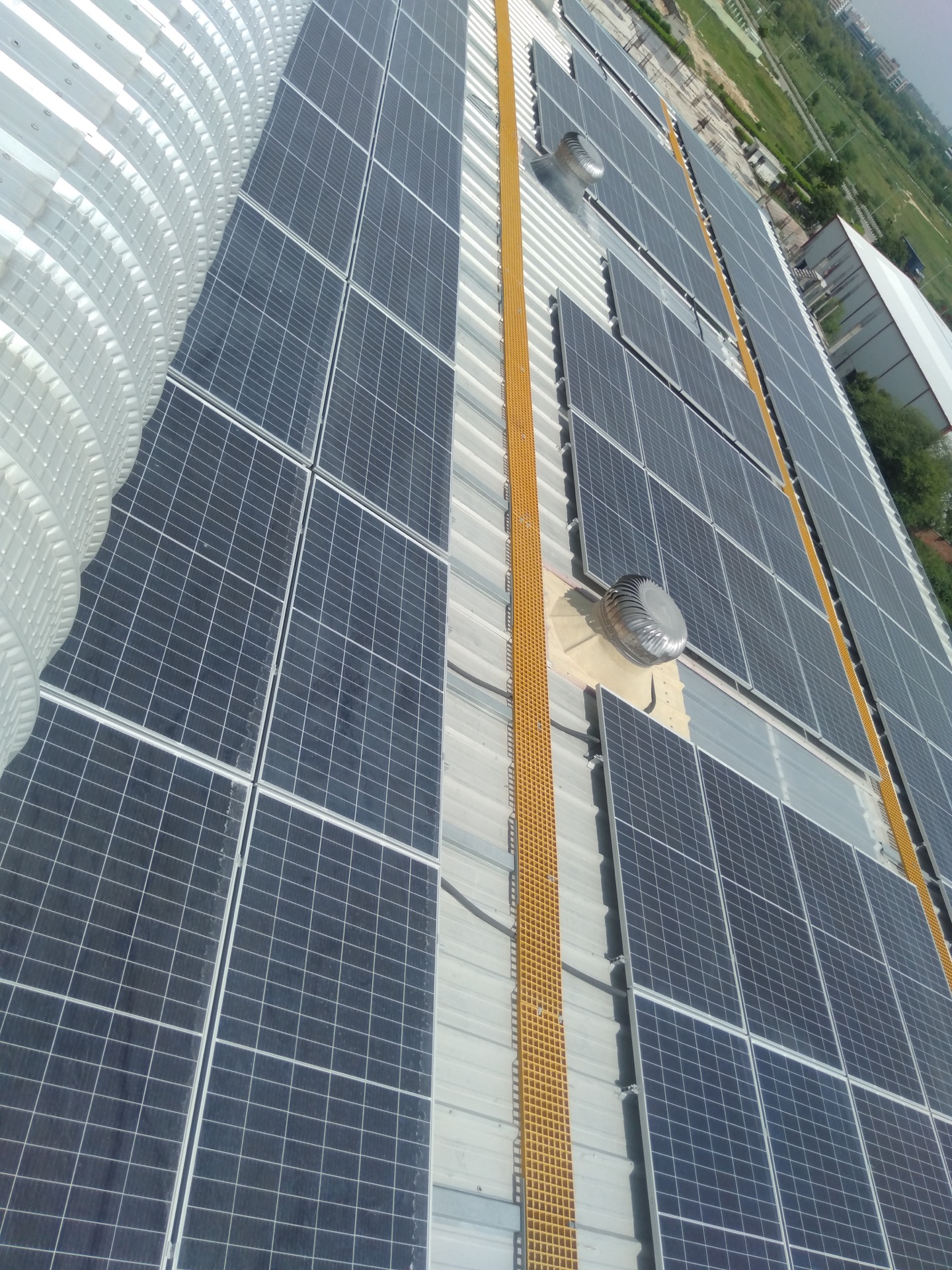
The roof did not offer as much as its area suggested. A lift machine and other rooftop obstructions cast partial shading across it, and shaded ground is worse than empty ground on a solar roof, because the loss spreads beyond the modules directly affected.
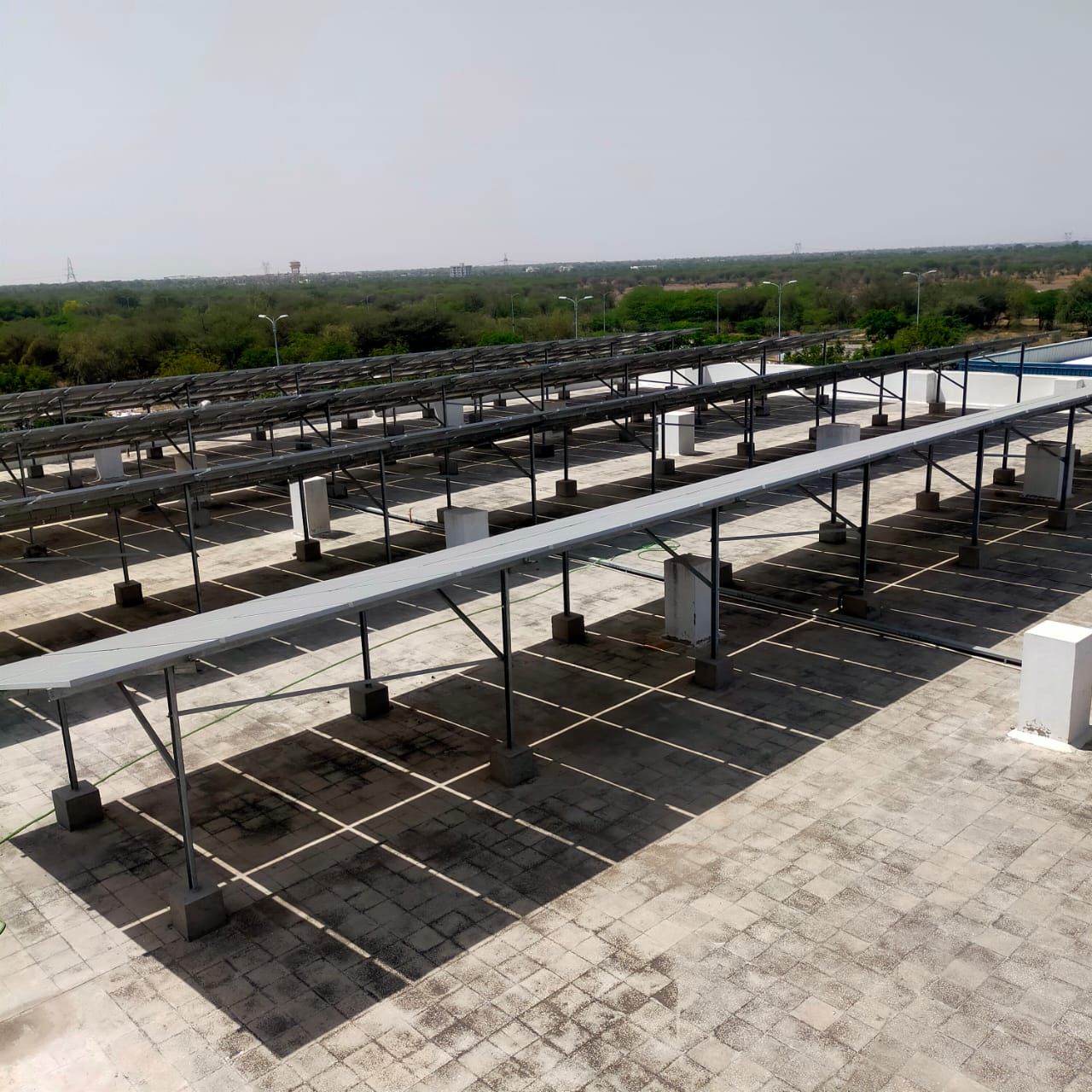
That pointed at the one large open surface left on site, which was the car parking area. Using it for generation was the only way to reach meaningful capacity, but parking is not spare land. The factory needed those spaces to stay usable exactly as they were.
So the requirement was a long-term engineering solution rather than a bigger array: convert space the plant was already using into a second job, keep cost optimized, and resolve the safety and site issues that come with building over an area where people park and walk every day.
Solution
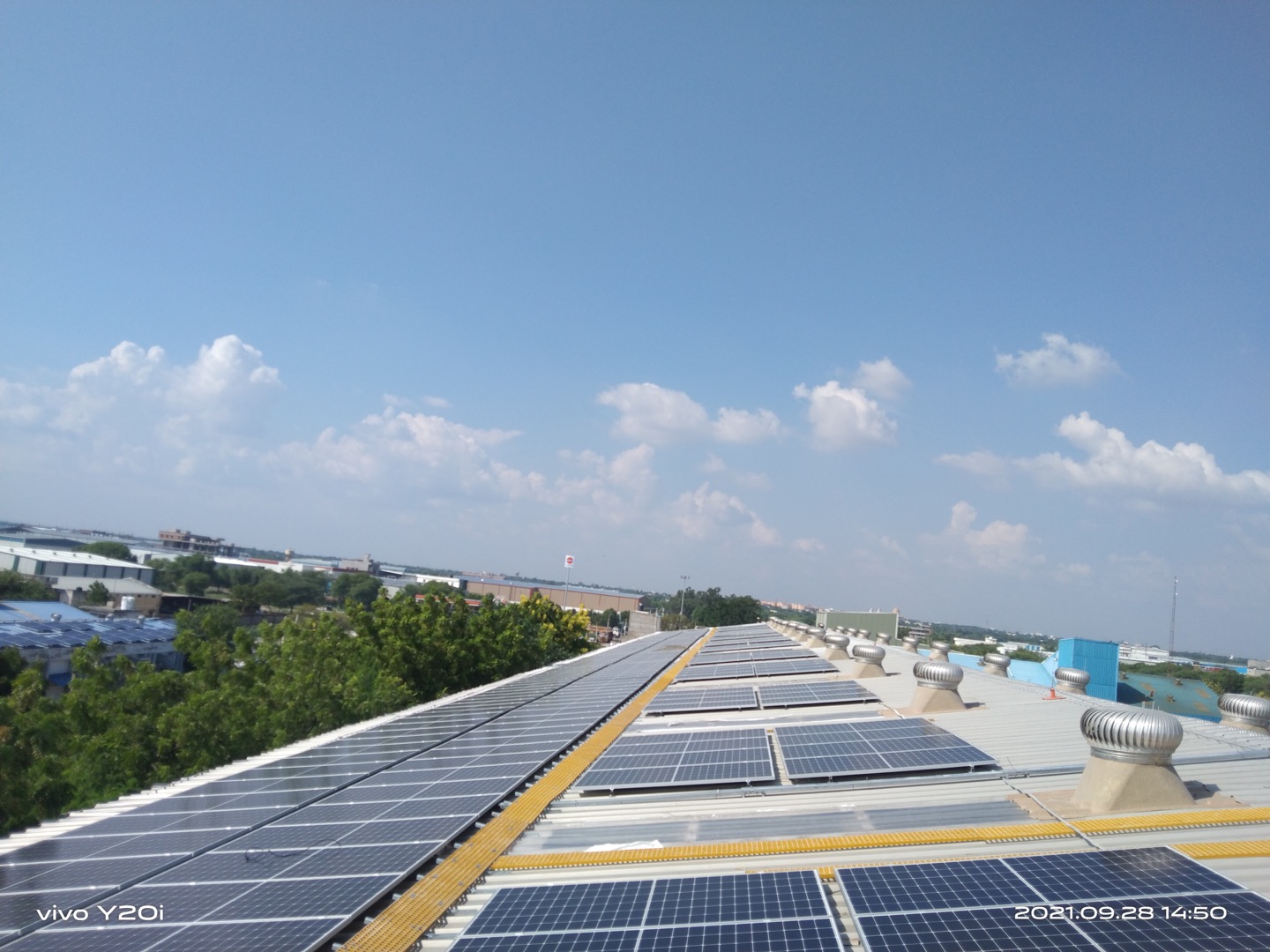
SolarMaxx split the plant across two surfaces. Rooftop modules were laid out to work around the lift machine and the other obstructions rather than fighting them, and the parking area was brought into the design as generating space through a dedicated solar carport.
The carport is what makes the numbers work on a site this tight. It converts the existing parking area into a dual-purpose space, so vehicles park underneath exactly as before while the structure above generates, and the factory gives up nothing to gain the capacity.
Building over a parking area raises the structural stakes, because the array sits on a tall, open frame rather than a roof deck. A robust solar carport structure was designed and engineered to withstand heavy wind loads and hold up over the long term, built as a hot-dip galvanized GI mounting structure.
The electrical side pairs Sungrow and KACO inverters across the rooftop and carport sections, connected under net metering, so both surfaces feed the plant as a single system.
SolarMaxx handled the full documentation and regulatory process end to end: the net metering application, the NOC and demand process, meter and CT testing, the net metering agreement, CEIG approvals, Form-51 completion, and the final metering and protection work.
From site assessment to commissioning took about three months.
Outcome
The 378 kW plant generates about 1,297 units of power a day and saves close to Rs. 38 lakh every year. It offsets about 1,370 tonnes of CO2.
What makes this site worth studying is not the capacity, it is where the capacity came from. On a plot with no room to expand, a shaded roof, and a parking area that had to keep working as a parking area, the plant was assembled out of space the factory was already using. Nothing was given up to make room for it.