Manoharpur, Jaipur
683 kW
- Commissioned
- 2024
- Modules
- Jinko 545Wp
- Inverters
- Sungrow
- Mounting
- Mini rail mounting structure
- Metering
- Net metering
- Roof
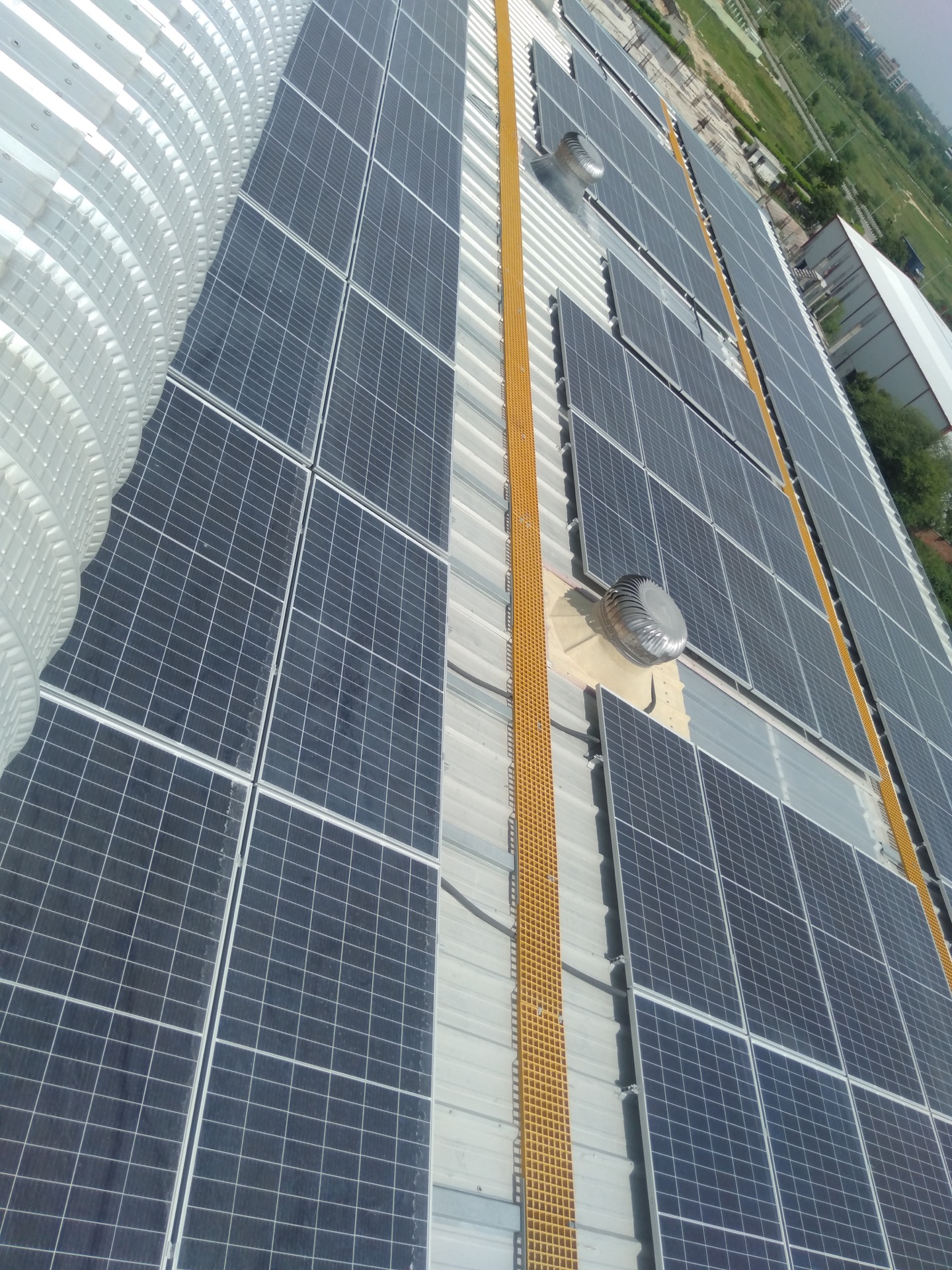
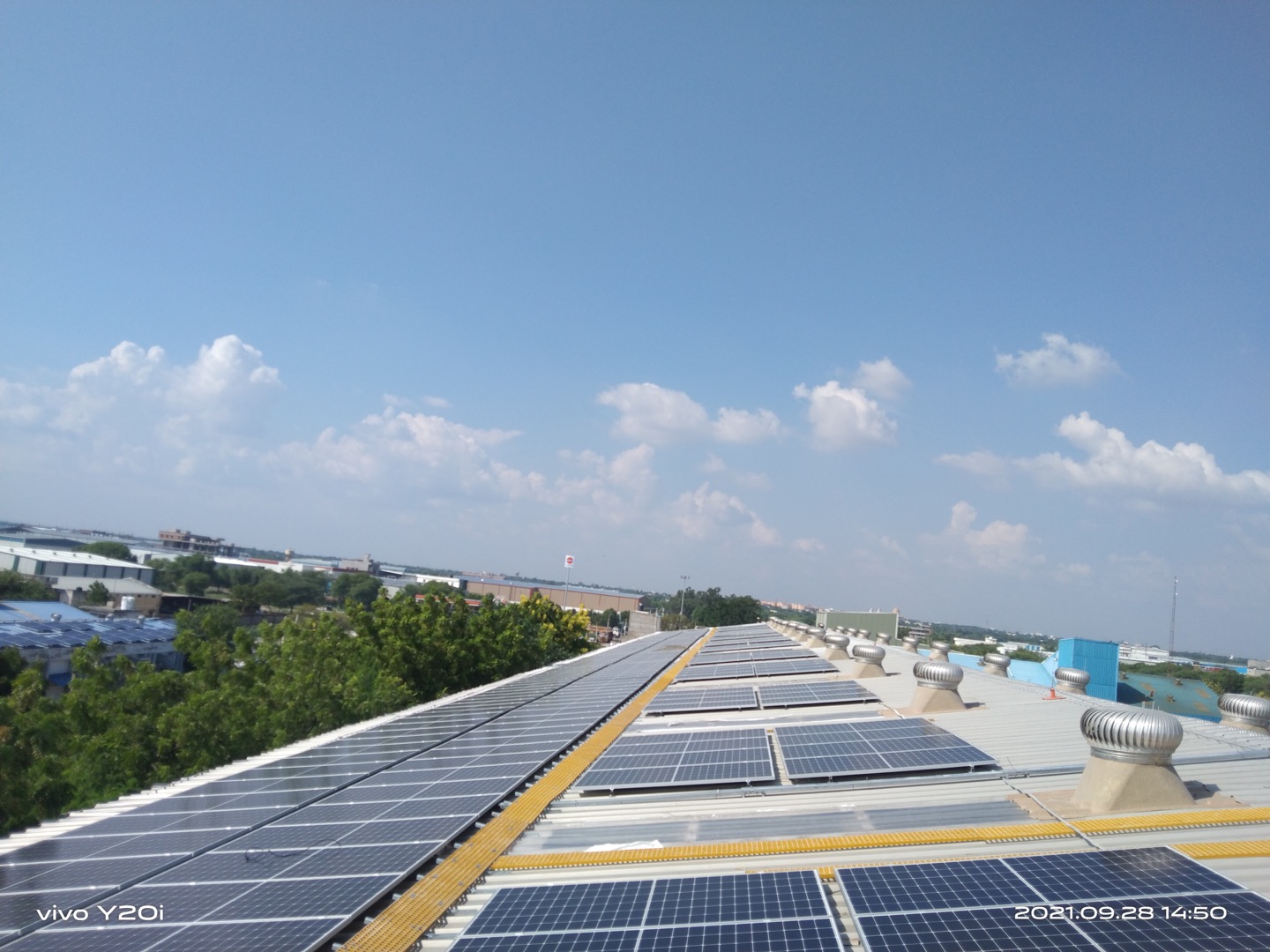
- Rooftop, dome type tin shed
- Annual Savings
- Rs. 74.8 Lakh
- CO2 Offset
- 1,881 tonnes
Rooftop solar on curved tin sheds, designed around turbo vents and skylights without losing capacity.
MANOHARPUR, JAIPUR
A packaging plant in Manoharpur, Jaipur makes PP woven bags and industrial packaging. That work runs on machines, and those machines run on electricity. Their power use was high, and it stayed high through the whole working day.
The problem was not just the size of the bill. It was the direction it was heading. Grid electricity tariffs kept rising, and every increase pushed up the cost of making each bag. In a market where buyers compare prices closely, that slowly eats into what a business can charge and what it can keep.
The team also had a second goal. They wanted to lower their carbon footprint and improve how efficiently the plant used energy, not just spend less on power.
Most of their electricity was being used during daylight hours. That is the same window when a solar plant produces the most. So the opportunity was clear, but so was the pressure to get the design right.
The roof made that harder. The sheds were dome type tin, which means curved, not flat. The surface was already crowded with turbo vents and skylights that could not be covered or blocked. The structure itself could not take heavy loads, so anything mounted on it had to stay light. And the plant needed people to be able to walk the roof safely afterwards for cleaning and checks.
That left a narrow path. Fit as much capacity as possible on a curved, obstructed, load-limited roof, and still leave safe access on top.
SolarMaxx started with a full structural and electrical feasibility study of the site before drawing a single layout. That study decided what the roof could actually carry and where panels could go.
From there the team did detailed engineering for a mounting solution built specifically for dome sheds. A mini rail mounting structure was used because it spreads load across the roof and keeps the total weight low, and walkways were built into the design so the roof stays safe to move around on.
On the electrical side, the team sized the inverters, set the string configuration, and planned the cable routing together rather than separately. Doing it that way keeps losses down and makes the system safer and easier to live with over the long run. The plant uses Jinko 545Wp panels with Sungrow inverters, connected under net metering.
An online remote monitoring system was added so performance can be tracked live, faults show up early, and maintenance can be planned before something breaks instead of after.
SolarMaxx also handled the paperwork end to end: the net metering application, the NOC and demand process, meter and CT testing, the net metering agreement, CEIG approvals, Form 51, and the final metering and protection work.
From first site assessment to commissioning took about three to four months.
The 683 kW plant now generates about 2,561 units of power a day and saves roughly Rs. 74.8 lakh every year. It cuts about 1,881 tonnes of CO2.
Because the layout was pushed to use as much of that difficult roof as possible, the plant produces more than a conservative design would have on the same building. The daytime power the plant makes goes straight into production instead of being bought from the grid, so the cost of making each bag is now partly protected from the next tariff increase.
683 kW

SEZ, JAIPUR
GHANA, AFRICA
Get a free site assessment and financial model. No obligation. No generic quotes.
Book a Free Assessment