Challenge
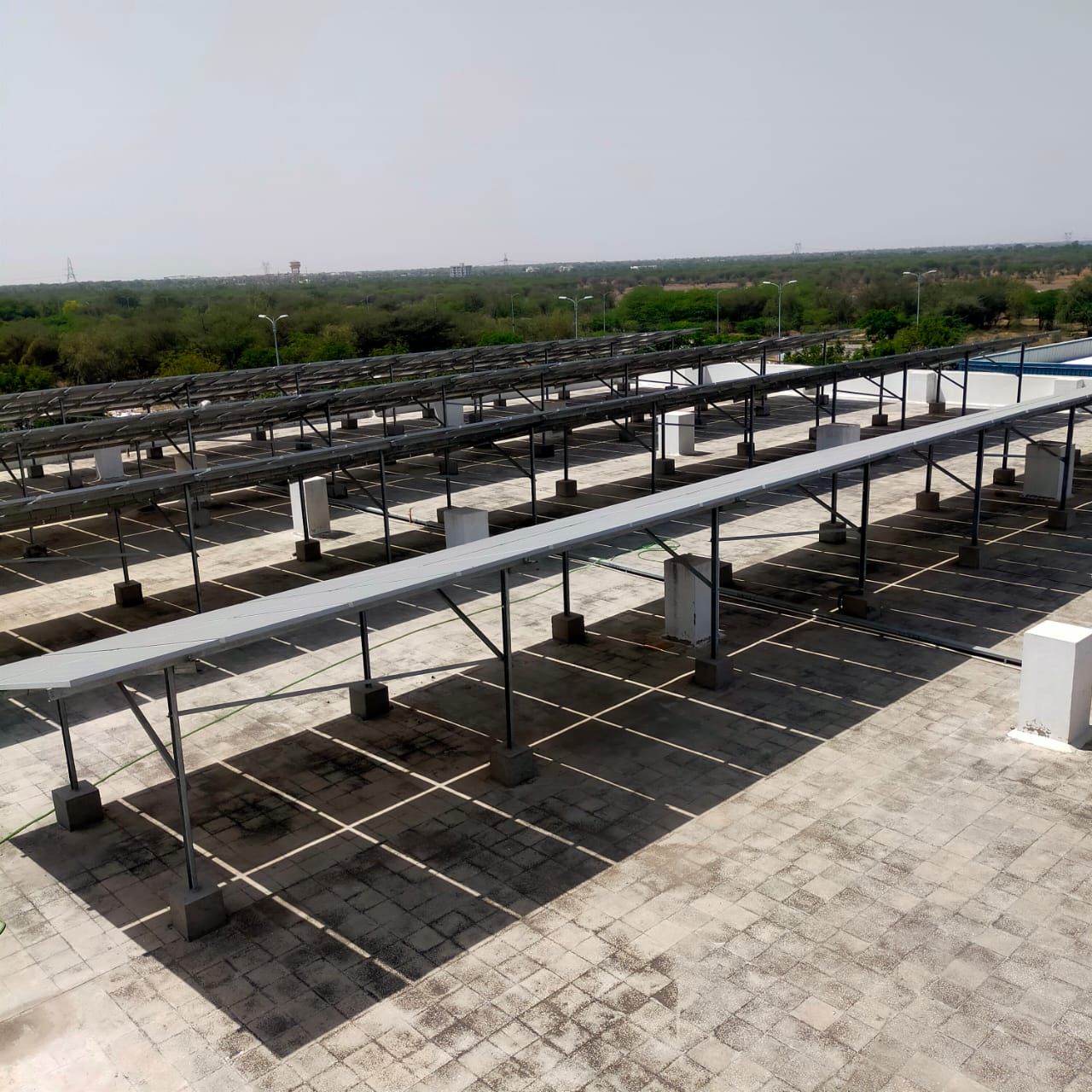
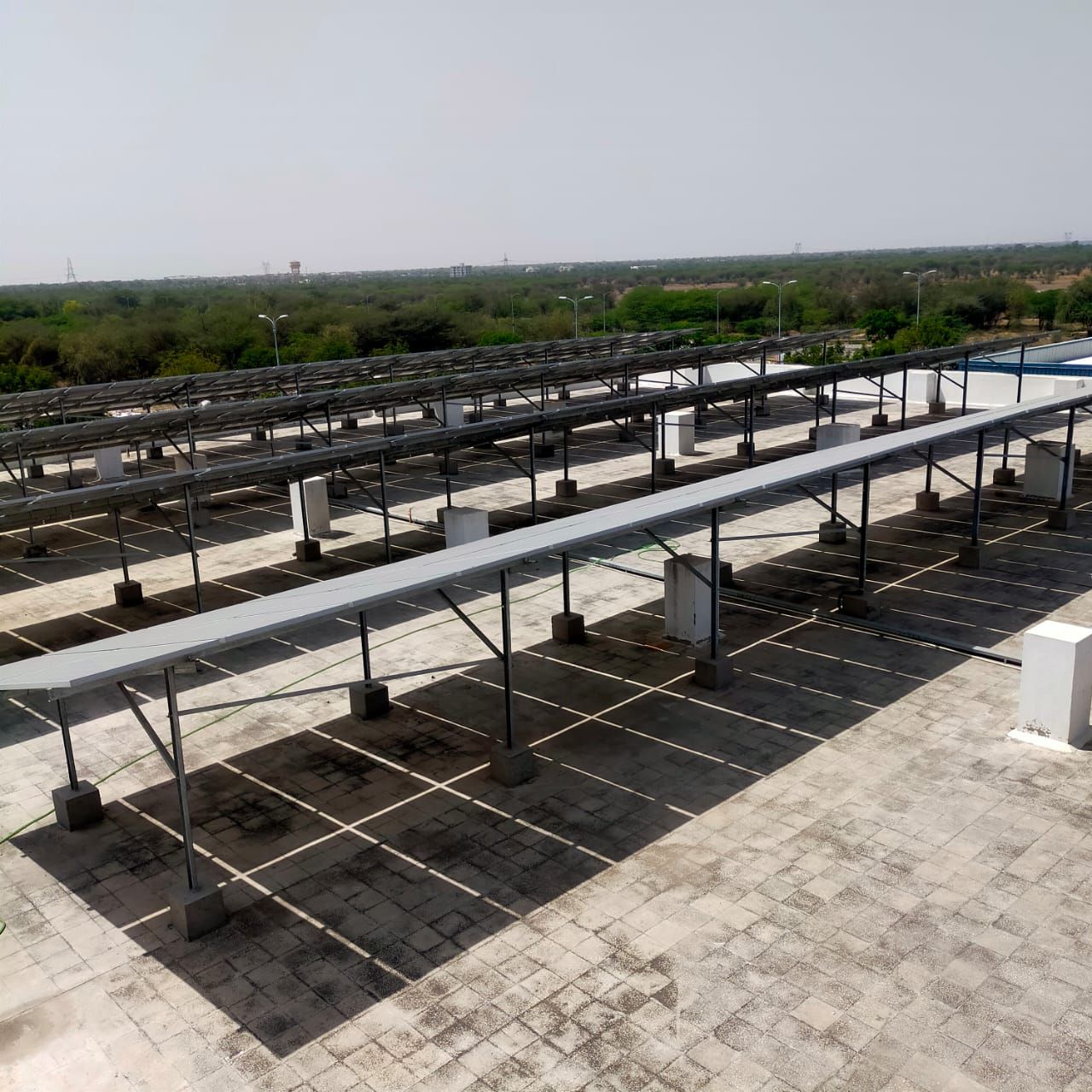
Global Surfaces Limited also runs a stone manufacturing facility in Bagru, a second site alongside its SEZ plant. The building carries the same working conditions that make rooftop solar harder than it looks: heavy dust deposition across the year, and soil losses that quietly pull down what a plant actually delivers against what it was designed to deliver.
The electricity cost was the starting point. Monthly bills were high, and so was the cost per unit of power feeding production. When the grid went down, the site fell back on diesel generators, which added running cost on top of the bills and pushed carbon emissions up during shutdown hours.
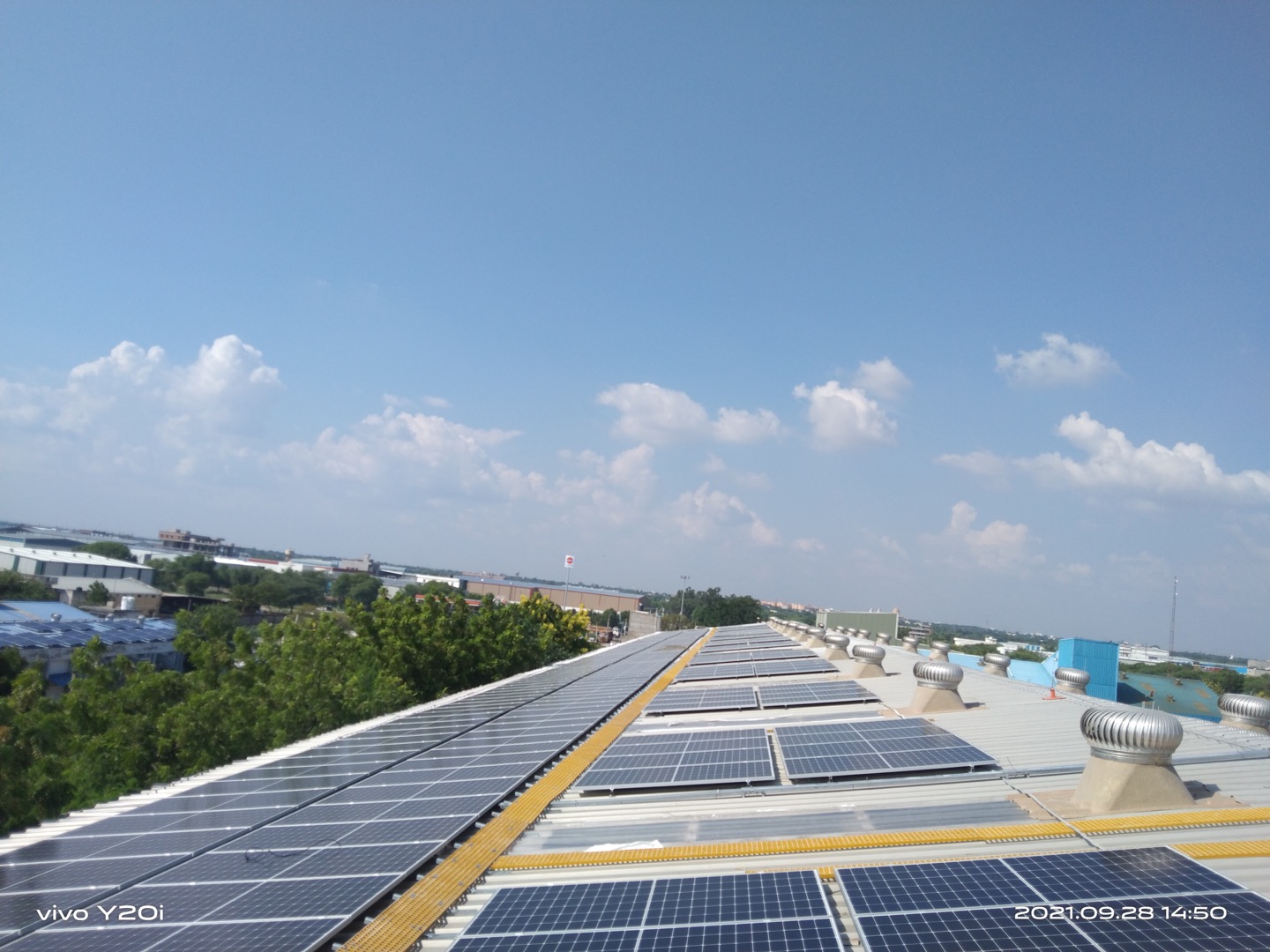
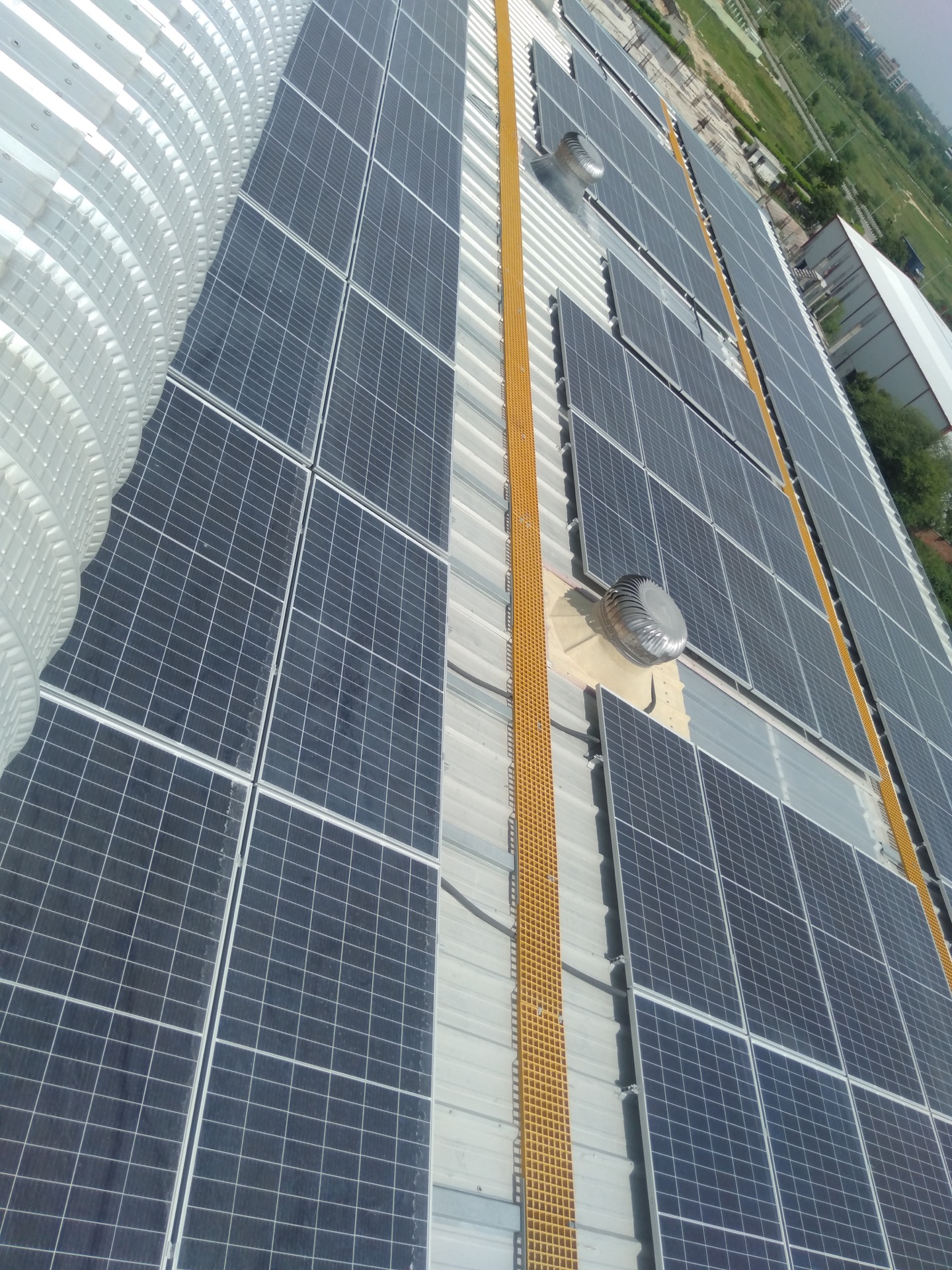
The roof itself was the difficult part. The tin shed sat at a high tilt angle, steep enough that installation raised genuine safety questions before a single panel went up. Roof orientation and tilt also limited how modules could be laid out and how much energy each one would return.
There was also less usable roof than the factory's energy demand called for, so whatever went up had to work hard for its space. And like the SEZ site, this plant was built during the Covid wave, which constrained how work could be scheduled and staffed on site.
So the brief was tight: make a steeply tilted roof safe to build on and safe to maintain for years afterwards, squeeze real capacity out of limited space, and cut both the electricity bill and the diesel dependence behind it.
Solution
SolarMaxx treated roof access as a design problem rather than an afterthought. On a shed at that tilt, a plant is only worth what someone can safely reach, clean, and inspect over its life, so the safety design came first and the layout was built around it.
Zero-degree maintenance walkways were proposed and installed, giving flat, level footing across a sloped roof, together with a safety lifeline system. Between them, the site got safe access for installation and for the operation, inspection, and maintenance work that follows for the next two decades.
The mounting was built to last in the open. A mini rail mounting structure in hot-dip galvanized steel handles the site's dust and weather exposure without corroding away, which matters on a roof where replacing hardware later means working at height again.
On the electrical side, the DC/AC ratio was optimized at inverter level so the plant makes the most of a constrained, tilted roof rather than leaving capacity unused. The plant uses Trina 455Wp modules with Sungrow inverters, connected under net metering, with intelligent monitoring on a cloud portal so performance can be tracked remotely and problems surface early.
SolarMaxx handled the full documentation and regulatory process end to end: the net metering application, the NOC and demand process, meter and CT testing, the net metering agreement, CEIG approvals, Form-51 completion, and the final metering and protection work.
From site assessment to commissioning took about three months.
Outcome
The 420 kW plant generates about 1,506 units of power a day and saves close to Rs. 44 lakh every year. It offsets about 2,673 tonnes of CO2.
The savings come from two directions at once: a lower monthly bill and a lower cost per unit for the grid power the plant no longer buys, plus less reliance on diesel generators and the fuel cost and emissions that came with them. Because the walkways and lifeline were designed in from the start, the steep roof that made this site difficult to build on is also a roof the team can safely keep working on, which is what keeps a plant performing long after commissioning.