Challenge
Global Surfaces Limited runs a natural and engineered stone manufacturing plant inside SEZ Jaipur. Stone processing is precise, power-intensive work, and this factory runs around the clock. The equipment below the roof is high-precision machinery that cannot afford interruption, so electricity here is not just a bill to pay. It is what keeps production moving.
The site also carried real engineering risk. The tin shed roof was new and costly, and the team was worried that mounting solar on it could cause water leakage onto the machinery underneath. Cable laying, installation, and interconnection all had to be done without stopping 24/7 plant operations.
Inside an SEZ, regulatory sanction limits govern what can be built and where. There was only so much roof space available compared to how much energy the factory needed. Roof orientation and tilt added further limits, and heavy dust deposition and soil losses made it harder to protect output across the year.
The project also had to move forward during the Covid wave, which tightened how work could be planned and executed on site. Through all of this, the plant still had to comply with every applicable government guideline and finish within the DISCOM-prescribed timeline.
That left a narrow path: fit meaningful capacity on a limited, difficult rooftop, protect a new tin shed from leakage, keep a round-the-clock factory running, and still clear every regulatory step on time.
Solution
SolarMaxx worked from the roof constraints and the operating reality of the site before fixing a layout. The first priority was to protect the new tin shed, keep production uninterrupted, and still deliver a system that could perform on a rooftop with orientation, tilt, and dust challenges.
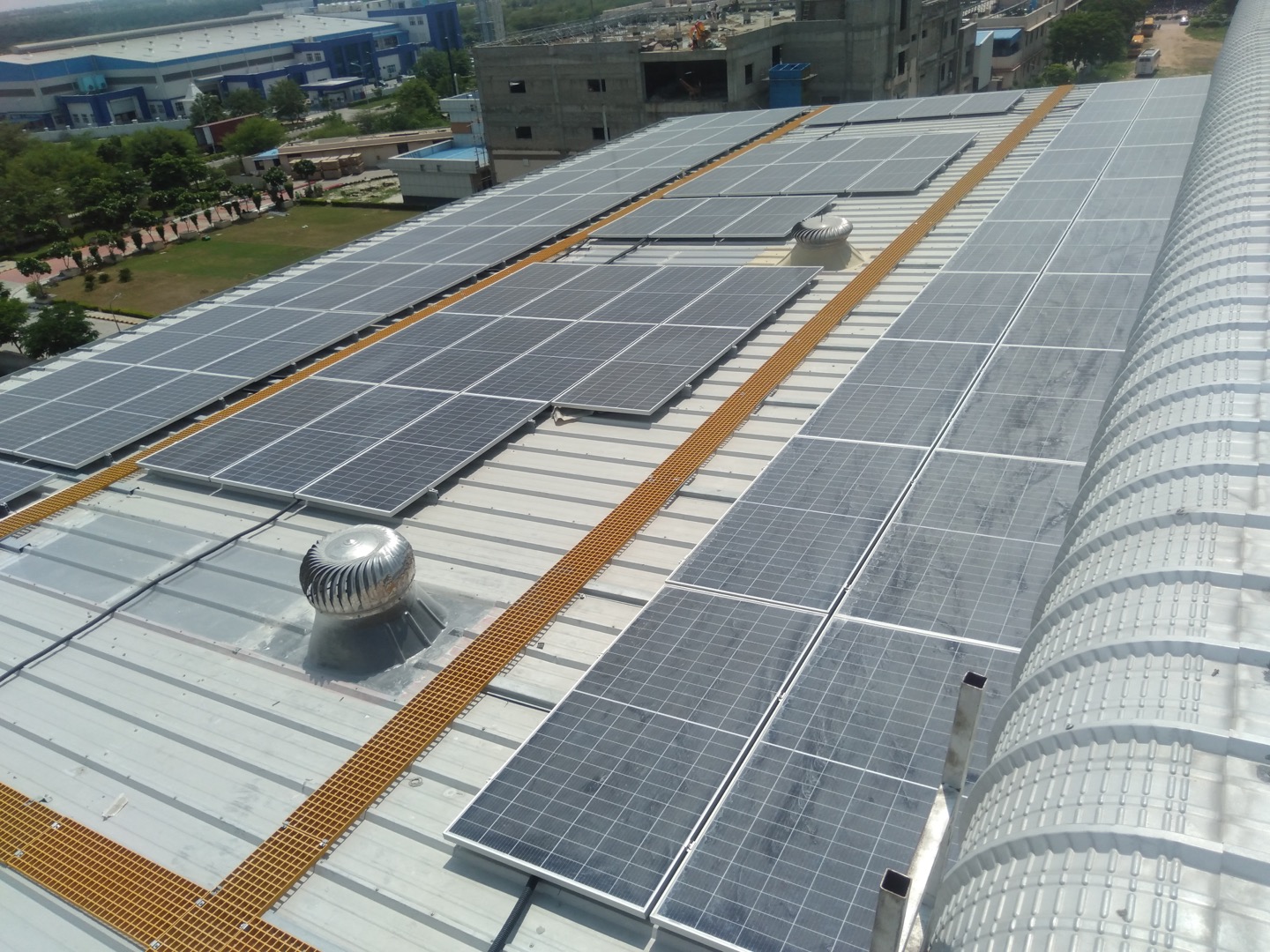
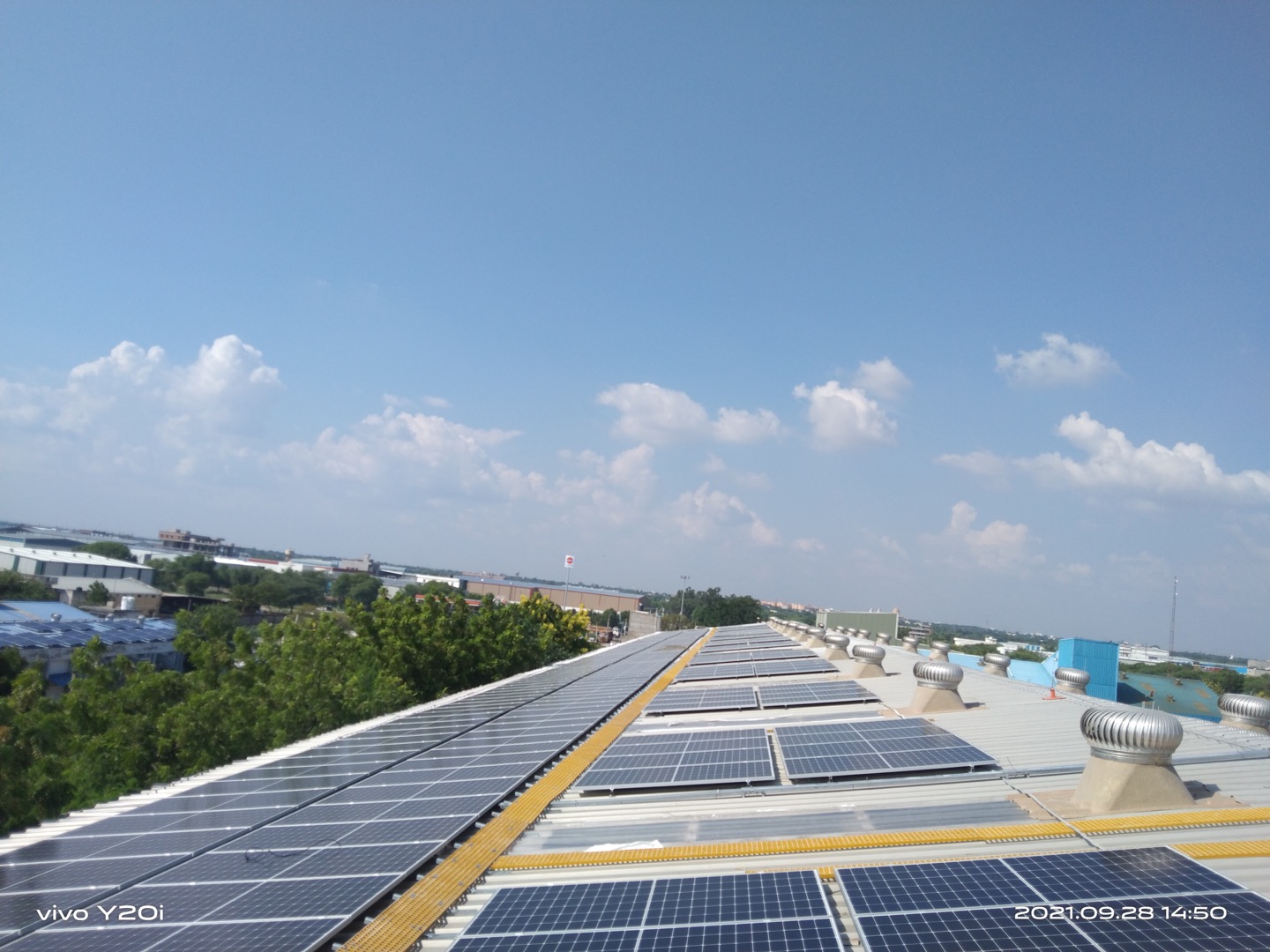
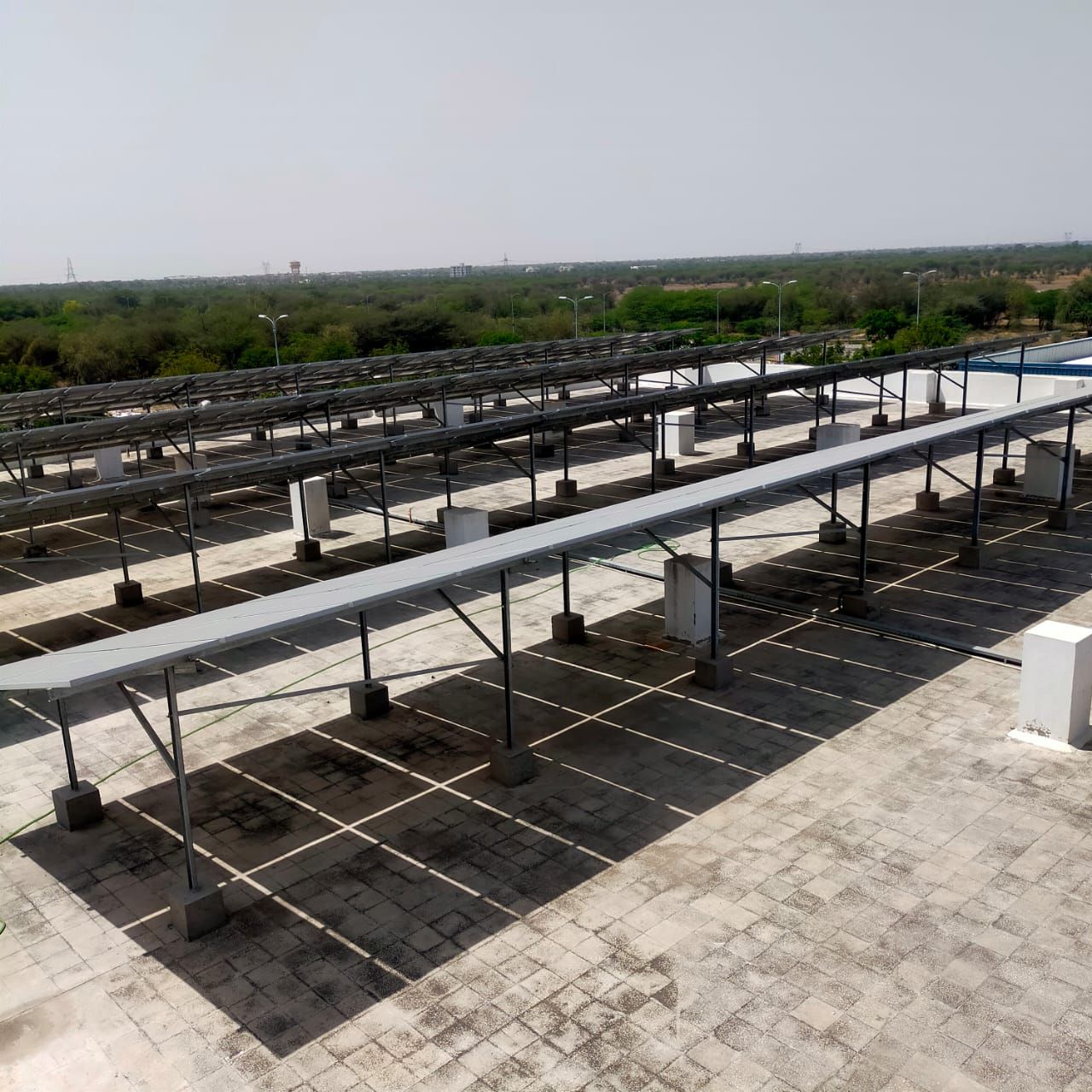
The team used engineered anodized aluminum structural rails and a walkway so the roof load spread evenly across the structure. Height mattered as much as load: on an open tin shed, excess structure height pulls in more wind, so the plant was built on a mini rail anodized aluminum mounting system rather than a taller frame. That system was paired with an adhesive-based chemical mounting method instead of drilling into the tin shed, which removed the water leakage risk the client had flagged. The plant uses Canadian Solar 450Wp modules with SolarEdge inverters, connected under net metering.
SolarEdge module-level power optimizers allowed each panel to be monitored and optimized on its own. That reduced mismatch losses from dust, orientation, and uneven roof conditions, and helped the system run closer to its designed efficiency on a difficult surface.
SolarMaxx handled the full documentation and regulatory process end to end: the net metering application, the NOC and demand process, meter and CT testing, the net metering agreement, CEIG approvals, Form-51 completion, and the final metering and protection work.
From site assessment to commissioning took about three months.
Outcome
The 1,300 kW plant now generates about 4,263 units of power a day. It cuts the plant's annual unit consumption from the grid by 40 to 50 percent, saves roughly Rs. 1.30 crore every year, and offsets about 7,801 tonnes of CO2.
Because the mounting protected the new roof and the installation stayed clear of round-the-clock production, the factory could add solar without trading reliability for savings. On a site where leakage risk, SEZ limits, and limited roof space all pressed in at once, the project shows how a difficult tin shed can still support a large rooftop plant.